


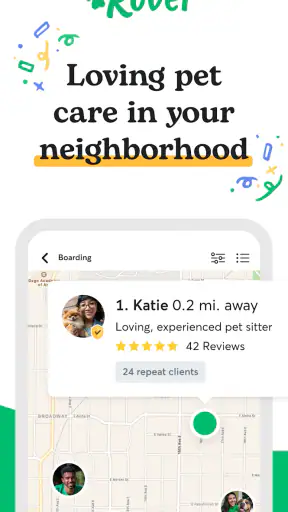


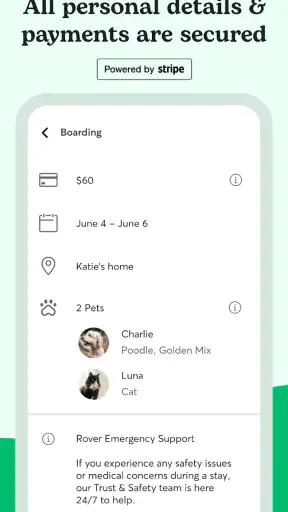
Finding someone to care for a pet is easy to underestimate until a work trip, family emergency, or long weekend appears on the calendar. I tried Rover as a way to handle that search from my phone, and my first impression was that it is less about novelty than about reducing the awkwardness of arranging care with a stranger. The app brings pet owners together with sitters and dog walkers, while giving the search process a more organized shape than asking around in a neighborhood group.
Rover is a free Travel & Local app from Rover.com, rated for Everyone. It has been around since Aug 14, 2013, and the current version is 26.0805.01 for devices running iOS 12 or later. Its scale is reassuring: the app has passed five million installs, with an average rating of 4.5 from roughly forty-seven thousand ratings and about nine thousand written reviews. Those numbers do not guarantee a perfect match, but they suggest this is an established service rather than a small experiment.
What the first week feels like
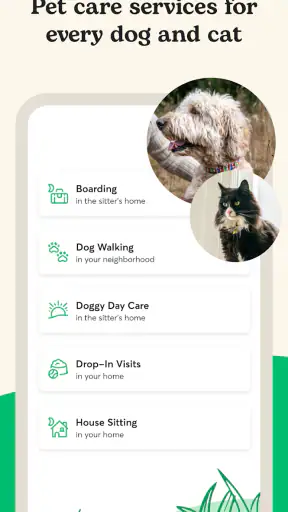
The strongest part of the first-use experience is the way it turns a vague request into a set of choices. Instead of simply searching for “a pet sitter,” I found myself thinking about the kind of help I actually needed: a walk, care in my home, or a stay elsewhere. That distinction matters because the right person for a midday walk may not be the right person for an anxious dog staying overnight.
The useful habit is to start the search before the need becomes urgent. I would enter the dates, location, and pet details, then compare profiles rather than selecting the first available person. A rushed search encourages decisions based only on distance or price. A calmer search lets me notice whether a sitter’s experience seems suitable for a senior dog, a puppy, a nervous cat, or a pet that needs a very specific routine.
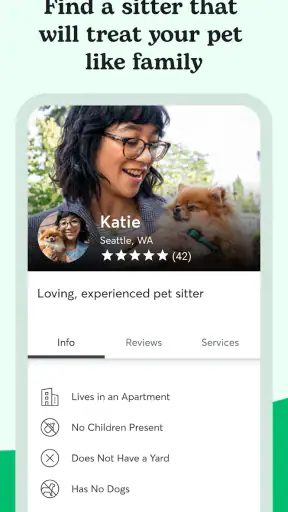
Rover works best when I treat the profile as the beginning of a conversation, not as a complete answer. I would use the messaging stage to explain feeding times, medication routines, walking limits, triggers, and what “normal behavior” looks like at home. That is one of the app’s less obvious strengths: it gives owners a place to organize the details they might otherwise forget during a hurried phone call.
For a first booking, I would also arrange a short introductory meeting whenever possible. The app can help me find a candidate, but it cannot replace the judgment of seeing how that person behaves around my pet. A dog that hides from every new visitor may need a slower introduction. A cat that dislikes changes may be better with someone who visits its familiar home instead of moving it. The service is useful here because it broadens the pool, while the owner still makes the final suitability decision.
My first-week recommendation is to compare several profiles and write down the important questions before sending a message. Ask how the sitter handles a pet that refuses food, what happens if a walk is cut short by weather, and how updates are normally handled. These questions are practical filters. They reveal communication style more effectively than a polished profile alone.
Choosing care for a real everyday situation
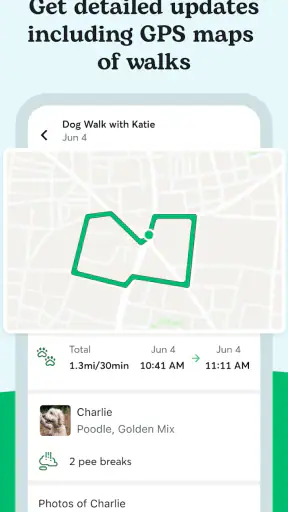
Imagine leaving early for work and returning late for several days. A dog walker may solve that problem without disrupting the dog’s home routine. If the same dog becomes distressed when left alone, a longer visit or in-home sitting arrangement may make more sense. For a weekend away, boarding with a sitter could be convenient, but only if the dog is comfortable in a different environment. I like that Rover lets me consider these different arrangements in one place instead of treating every need as the same booking.
For cats, the decision can be even more personal. Many cats are happier receiving visits at home than being transported. In that case, I would prioritize a sitter who is comfortable with quiet visits, litter maintenance, food preparation, and noticing small changes in behavior. The app is not just for energetic dogs; its value depends on matching the care format to the animal’s temperament.
There is also a useful distinction between a one-time emergency and a recurring routine. If I only need help during a holiday, I can focus on availability and a careful handoff. If I need regular weekday walks, I would pay more attention to consistency, travel time, and whether the arrangement feels sustainable for both sides. A person who looks ideal for one Saturday may not be the best long-term choice for repeated visits.
Where the app earns trust, and where it cannot
The large user base gives the search process a practical advantage. There are more chances of finding someone whose schedule and experience fit a particular pet, especially compared with relying only on a friend’s recommendation. The ratings and written feedback can also help me spot patterns in how people describe communication, punctuality, and care.
Still, reviews are not a substitute for reading carefully. A sitter can be excellent with relaxed adult dogs and less suitable for a pet that needs medication or cannot live with other animals. I would look for details that relate directly to my situation rather than treating a high overall impression as universal proof. This is where the app demands some work from the owner.
Rover also cannot remove the emotional risk of handing over responsibility for an animal. Even a well-designed search experience leaves questions that only a conversation and a meeting can answer. I see the app as a tool for discovery and coordination, not as an automatic guarantee that every booking will feel right.
Does it keep its value after the first booking?
The month-to-month benefit is familiarity
The lasting value appears after the first successful arrangement. Once I find a sitter who understands my pet’s habits, future bookings become less stressful. I no longer start from a blank search every time I travel or need help during a busy week. That accumulated familiarity is more important than the excitement of browsing profiles.
For recurring care, I would keep a simple private checklist of what the sitter needs to know: preferred walking route, food portions, hiding places, emergency contacts, and signs that the pet is uncomfortable. Updating those notes after each booking makes the next handoff smoother. The app helps with the connection, but the real long-term system is the routine I build around it.
This is also where Rover can be more useful than informal arrangements. Friends and relatives may be kind and trustworthy, but their schedules can change, and asking repeatedly can feel uncomfortable. A dedicated service gives me a repeatable way to look for care when personal contacts are unavailable. On the other hand, a trusted neighbor who already knows my pet may still be the better option for a simple, familiar arrangement.
I would not open the app every week just to browse. Its recurring value is tied to actual needs: planned travel, regular walks, changing work hours, or a pet whose care cannot be covered by one person. When those needs are present, having a known starting point saves time. When they are not, the app naturally becomes something I use occasionally rather than a daily habit.
How to make repeat bookings less fragile
My practical advice is to avoid depending on only one sitter. A favorite person may become unavailable during holidays, illness, or schedule changes. Keeping a second suitable contact in mind gives me a backup without forcing a last-minute search. I would also book important dates early, especially when the care involves several days or a pet with unusual requirements.
After each visit, I would record what worked and what did not while the details are still fresh. Did the pet settle quickly? Were the instructions followed? Was communication frequent enough? This helps distinguish a genuinely good match from a booking that was merely adequate. It also makes the next conversation more precise.
Another useful trade-off is separating convenience from continuity. A nearby sitter may make short walks simple, while a slightly farther person may be much better with a nervous animal. For occasional care, convenience can win. For repeated care, I would favor reliability and a calm relationship over the shortest possible distance.
The maintenance burden owners should expect
Rover reduces searching, but it does not eliminate preparation. I still need to keep pet information accurate, explain the routine clearly, check dates, and respond to messages. If my pet’s food, medication, behavior, or access instructions change, I need to communicate that rather than assuming an old arrangement will cover it.
The handoff itself takes time. Keys, entry instructions, food locations, leashes, litter supplies, and emergency details all need to be clear. For a first booking, this preparation can feel like extra work compared with asking a family member who already knows the house. That is a genuine limitation, particularly for owners who want a completely hands-off solution.
There is also a mental maintenance cost. I have to judge profiles, interpret reviews, ask questions, and decide whether a person is a good fit. The app makes those tasks more manageable, but it does not make them optional. Anyone expecting a single tap to solve a sensitive care decision may find the process slower than expected.
That effort is worthwhile when the arrangement is repeated. A careful first handoff can become a reusable routine. It is less worthwhile when the need is tiny, the pet is extremely easy to care for, and a trusted nearby person is already available.
What can cause fatigue over time
The biggest source of fatigue is comparing too many options without a clear shortlist. Browsing can become counterproductive when every profile starts to look similar. I would narrow candidates using a few non-negotiable requirements first, then compare communication and practical fit. This keeps the search focused on the pet rather than on endless scrolling.
Another source of frustration is the difference between availability and suitability. A person may appear convenient for the dates but not be appropriate for a pet that needs special handling. Conversely, the ideal sitter may not fit the calendar. That tension is unavoidable in real-world care, and the app cannot make every good match available at the same time.
Last-minute bookings can also make the experience feel more stressful. With little time for questions or an introduction, the owner has fewer opportunities to check compatibility. I would use Rover as early as possible for holidays and important trips, then reserve urgent searches for situations where the alternatives are genuinely limited.
There is a quieter kind of fatigue too: repeating the same instructions. A detailed routine is helpful, but rewriting it for every new person takes energy. This is another reason to value a reliable repeat sitter. The longer Rover remains useful for me, the more its benefit depends on building continuity rather than constantly starting over.
Who should use it, and who should look elsewhere?
I think Rover is a strong fit for owners who travel, work changing hours, need dog walking, or want more choices than their immediate social circle can provide. It is particularly helpful for someone moving to a new area and lacking established local contacts. The free entry point makes it easy to explore the service before deciding whether it fits a real care need.
I would be more cautious if my pet has complex medical needs, severe aggression, or behavior that requires a specialist. In those cases, a veterinary recommendation, professional trainer, or highly specialized care provider may be a better first stop. A broad sitter marketplace can help with ordinary routines, but unusual risk deserves a more targeted solution.
I would also skip it for a very simple arrangement when a trusted neighbor already knows the animal and can help. The app adds structure and choice, but it also adds profile comparison, messaging, and handoff planning. Convenience depends on the situation, not just on the number of available sitters.
Compared with asking friends, Rover offers a wider search and a more repeatable process. Compared with hiring a traditional local kennel or walking company, it may feel more personal and flexible, especially when care at home matters. The trade-off is that I have to evaluate an individual sitter rather than relying entirely on an established facility’s standard process. For me, that makes the app best when personal fit matters more than a uniform, institutional experience.
My long-term verdict
After the novelty fades, Rover earns space on my phone only when it solves a recurring practical problem. It is not an app I would use for entertainment or casual browsing. Its value comes from making pet-care arrangements easier to repeat, especially after I have found someone dependable and learned how to prepare a clear handoff.
The strongest insight is that the service is really two tools at once: a discovery tool for finding possible care and a coordination tool for turning that possibility into a workable routine. The first part saves search time. The second part determines whether the relationship lasts. Owners who invest in careful questions, introductions, and accurate instructions are likely to get much more from it than owners who treat it as an instant booking button.
My final recommendation is positive, with sensible limits. I would install it before a trip, a change in work schedule, or the arrival of a pet that needs regular help. I would compare it with trusted personal contacts and specialist providers rather than assuming it is always the best answer. For everyday pet owners who want a broader pool of sitters and walkers, the free Rover app is a useful safety net, and its lasting value comes from finding a dependable human match rather than from the app itself.
Rover is worth keeping when it becomes part of a thoughtful care routine, not when it is expected to replace judgment.


